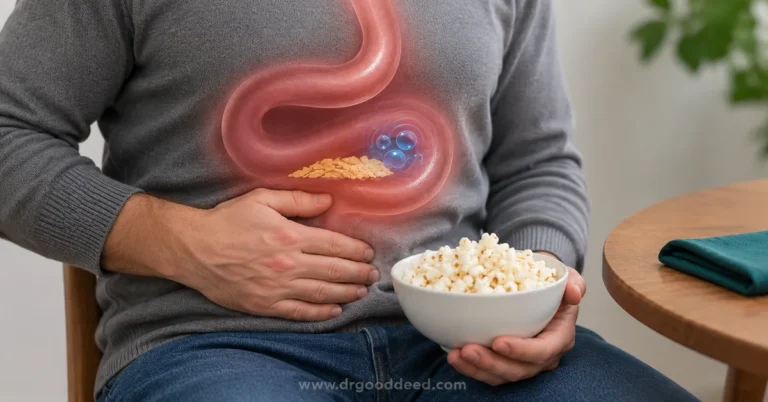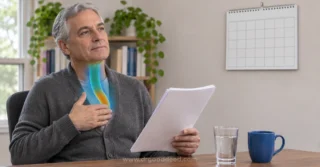
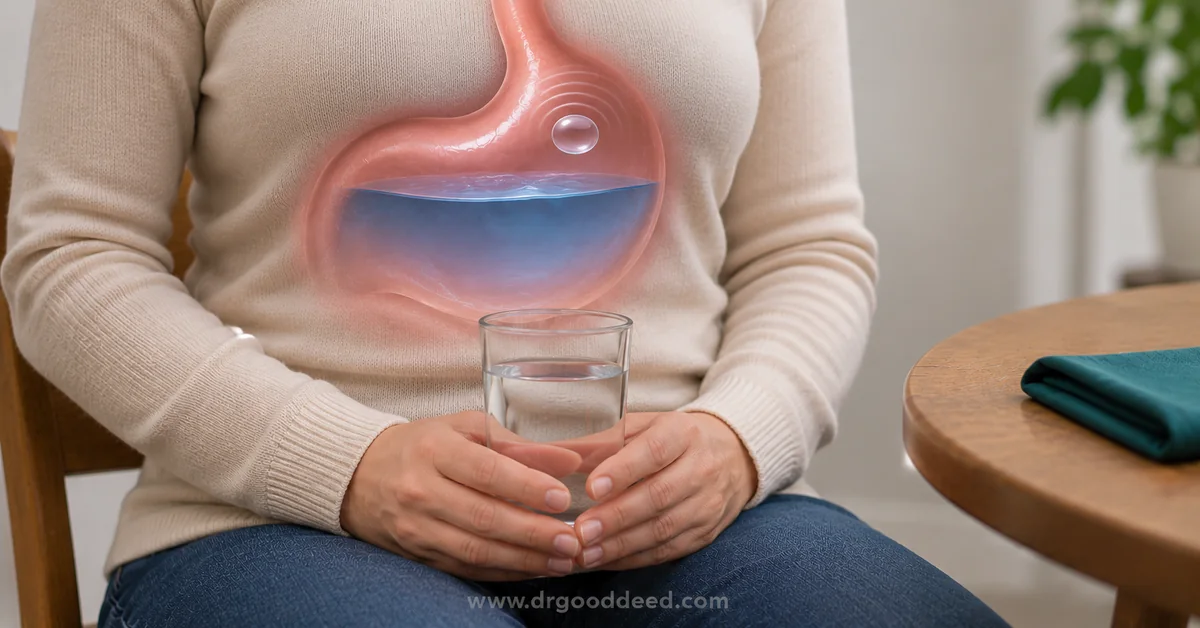

If you feel bloated after drinking water, the cause is usually how the water goes down or what is already in your gut, not the water itself. Swallowed air, constipation, trapped gas, and certain digestive conditions can all contribute. Understanding the pattern of your symptoms can help you work out what might be happening.
Key Takeaways
- Feeling bloated after drinking water usually comes from swallowed air, drinking a large amount at once, or gas already present in your digestive tract.
- Plain water does not produce gas or interfere with digestion, but it can make an already full stomach feel uncomfortable.
- Constipation, IBS, and slow stomach emptying can also contribute to abdominal pressure and bloating.
- Drinking slowly, avoiding carbonated drinks, and keeping track of your symptoms may help you identify what triggers the discomfort.
- Speak with your doctor if bloating keeps returning or comes with severe pain, repeated vomiting, or unexplained weight loss.
Why You Feel Bloated After Drinking Water
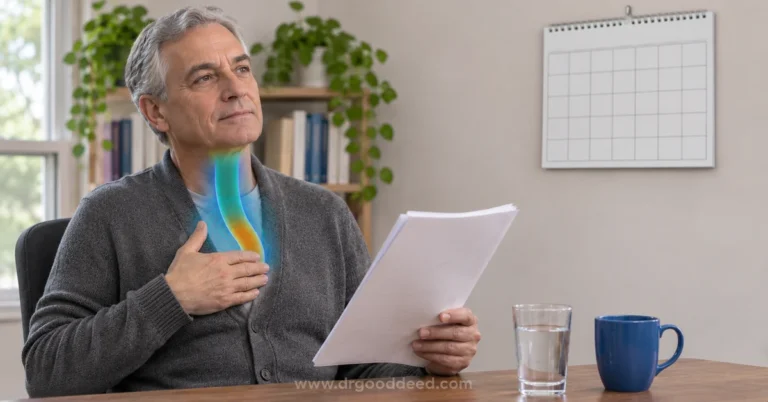
People feel bloated after drinking water when they swallow air, fill their stomach too quickly, or already have gas and stool building up in the digestive tract.
A glass of plain water does not create gas inside your stomach. It also does not wash away or dilute the digestive fluids your body needs to break down food (Mayo Clinic, 2025). Water actually supports digestion and helps keep stools soft. However, if your stomach is already full or sensitive, drinking more can make that feeling of pressure more noticeable.
Think about what happens after a large meal. You may already feel full, and drinking a full glass of water quickly can make your stomach feel even more stretched. You might notice tightness in your upper abdomen, frequent burping, or the urge to loosen your waistband. In this situation, the discomfort may come from the combination of food, fluid, and swallowed air rather than the water itself.
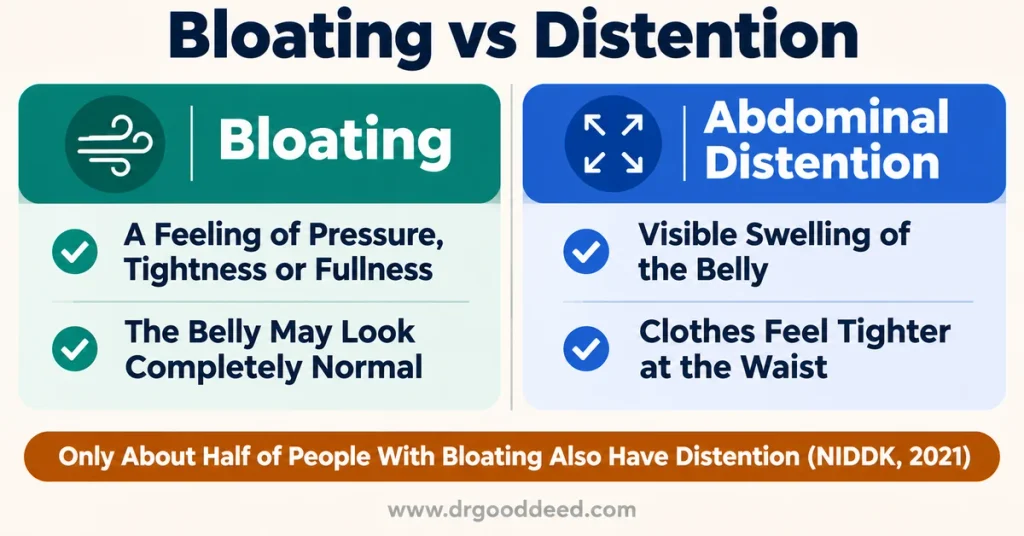
It also helps to understand the difference between bloating and abdominal distention:
- Bloating: This is the feeling of pressure, tightness, or fullness in your abdomen. Your stomach may feel uncomfortable even if it looks completely normal.
- Abdominal distention: This means your abdomen visibly becomes larger or swollen. Your clothes may feel tighter around your waist.
These symptoms can occur together, but they are not the same. In fact, only about half of people who report bloating also have visible abdominal distention, according to the National Institute of Diabetes and Digestive and Kidney Diseases (2021).
Common Causes of Bloating After Drinking Water
Bloating after drinking water does not always mean the water is causing the problem. Sometimes, it simply makes an existing digestive issue easier to notice. Here are some common reasons your stomach may feel uncomfortable.
- Swallowing air: You may swallow more air than you realize when you gulp water, drink too quickly, chew gum, or talk while drinking. That air can build up in your digestive tract and cause burping, pressure, or discomfort. Drinking through a straw can also increase the amount of air you swallow.
- Carbonated water: Sparkling water contains carbon dioxide, which creates the bubbles you see in the glass. Once you drink it, the gas can contribute to burping and abdominal pressure. If you already experience frequent bloating, try noticing whether sparkling water makes your symptoms worse than still water.
- Drinking a large amount at once: Finishing a large bottle of water in a short time can leave your stomach feeling stretched and overly full. You may notice this more after meals or when your stomach is already uncomfortable. Taking smaller sips throughout the day may feel easier.
- Constipation: When stool stays in your colon for longer than usual, it can become hard and difficult to pass. This buildup may also make it harder for gas to move through your digestive tract. Water helps soften stool, but it does not always relieve constipation immediately. If you regularly strain or have fewer bowel movements, constipation may be contributing to the bloating.
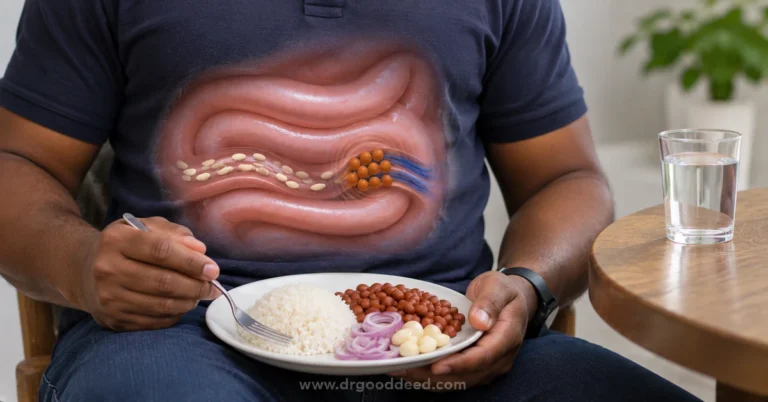
- Foods eaten around the same time: Some foods produce more gas as bacteria in your large intestine break them down. If you drink water during or after a meal, you may blame the drink even though the food is contributing to the discomfort. Pay attention to whether the same meals repeatedly leave you feeling bloated.
- Irritable bowel syndrome (IBS): IBS can cause abdominal pain, bloating, constipation, diarrhea, or a combination of bowel changes. It can also make you more sensitive to normal digestive sensations. You may notice pressure after drinking water, even when the amount you drink is not unusually large.
- Functional dyspepsia: This condition causes recurring discomfort in the upper digestive tract. You may feel full after eating only a small amount, experience upper abdominal pressure, or notice nausea and bloating. Drinking water when you already feel full may make the discomfort more noticeable.
- Small intestinal bacterial overgrowth (SIBO): SIBO occurs when excessive bacteria grow in the small intestine. These bacteria can produce gas while breaking down food, leading to bloating, abdominal discomfort, and changes in bowel habits. A doctor can decide whether testing is appropriate based on your symptoms.
- Fluid retention: Sometimes, a larger-looking abdomen is related to fluid buildup rather than gas. Hormonal changes and certain medical conditions can contribute to swelling. If you also notice ankle swelling, rapid weight gain, or shortness of breath, do not assume the problem is ordinary bloating.
If your stomach feels bloated regularly, even when you are not drinking water, the cause may be broader than your drinking habits. You can read more about the reasons behind being always bloated.
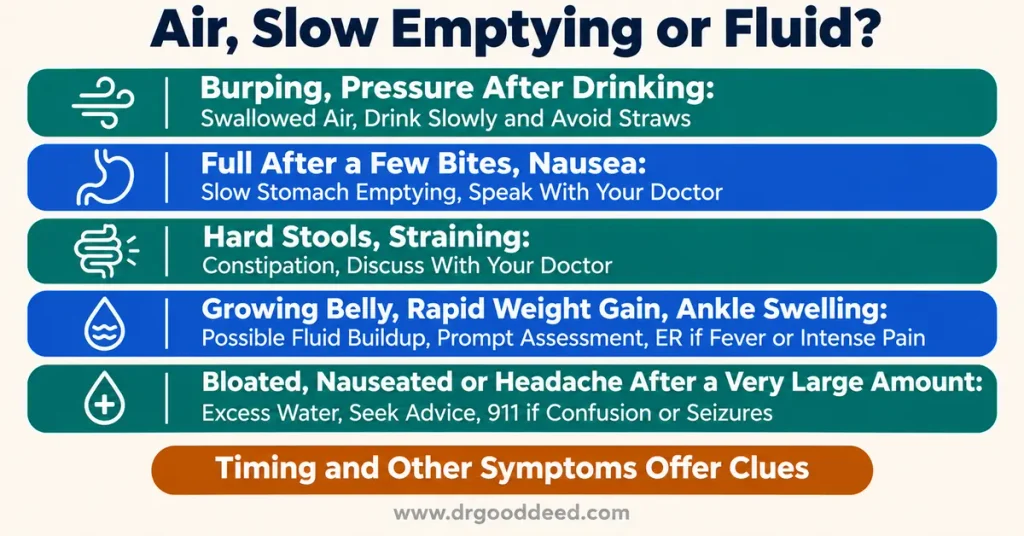
Air, Slow Emptying or Fluid: How to Tell
Not all bloating feels the same. The timing of your symptoms, where you feel the discomfort, and whether you have other symptoms can offer useful clues.
Table: What you notice, the likely reason, and the next step
| What you notice | Possible reason | What to do next |
| You burp frequently, feel pressure after drinking, or feel better after burping | Swallowed air or trapped gas | Drink slowly, avoid straws, and see whether carbonated drinks make symptoms worse |
| You feel full after a few bites, with upper abdominal bloating, nausea, or vomiting | Delayed stomach emptying, including gastroparesis | Speak with your doctor, especially if you regularly feel full after small meals |
| You have hard stools, fewer bowel movements, straining, or difficulty passing gas | Constipation | Discuss ongoing bowel changes with your doctor and maintain adequate fluid intake unless you have a fluid restriction |
| Your belly keeps getting larger, with rapid weight gain, ankle swelling, or shortness of breath | Fluid buildup, such as ascites | Arrange prompt medical assessment; fever or intense stomach pain needs the ER |
| You feel bloated, nauseated, or develop a headache after drinking a very large amount of water quickly | Excessive water intake | Stop forcing fluids and seek medical advice; confusion or seizures need a 911 call |
One condition worth understanding is gastroparesis. It occurs when the stomach takes longer than usual to move food into the small intestine. You may feel full after eating only a few bites, even when you have not had a large meal. Nausea, vomiting, bloating, and upper abdominal pain can also occur. For more detail, read about gastroparesis symptoms.
Diabetes is the most common known cause of gastroparesis (NIDDK, 2018), although other health conditions can contribute. If you regularly experience feeling full after eating a small amount, discuss it with your healthcare professional instead of assuming water is responsible.
Fluid buildup follows a different pattern. Ascites is the collection of fluid inside the abdomen. It can cause a swollen belly, rapid weight gain, ankle swelling, and shortness of breath. It is not the same as ordinary gas-related bloating. A doctor should assess these symptoms, particularly if they are new or getting worse.
How to Stop Bloating After Drinking Water
If you notice discomfort after drinking water, start by looking at your everyday drinking habits. You may find that a few small changes make your stomach feel more comfortable. The goal is not to avoid water but to make drinking easier on your digestive system.
- Take smaller sips: Avoid gulping down a full glass in a few seconds. Drink slowly, especially when you already feel full after eating. This may also reduce the amount of air you swallow.
- Avoid straws and fizzy drinks: If you often burp or feel pressure after drinking, try still water from a regular glass. Carbonated drinks add gas to your digestive tract, while straws may encourage you to swallow extra air.
- Spread your water intake throughout the day: Instead of drinking a large amount in one sitting, take smaller amounts at regular intervals. You do not need to force yourself to finish a bottle quickly.
- Pay attention to constipation: Hard stools and difficulty passing gas can make abdominal pressure worse. Adequate fluid intake helps soften stool. If constipation continues despite changes to your routine, ask your doctor about the next steps. You can also learn more about the connection between dehydration and constipation.
- Notice what you eat and drink together: Keep track of your meals, drinks, and when the symptoms begin. You may discover that certain foods cause bloating regardless of how much water you drink.
- Keep a symptom diary: Write down whether you experience burping, upper abdominal pressure, nausea, constipation, or visible swelling. Include how much water you drank and how soon the discomfort started. These details can help your doctor understand the pattern and decide whether you need further evaluation.
Doctor’s Tip: Do not reduce your water intake just because you feel bloated. Water supports digestion and helps soften stool. If you have heart, kidney, or liver disease, your fluid needs may be different. Ask your healthcare team whether you need a specific daily fluid limit.
Can Too Much Water Cause Bloating?
Yes. Drinking far more water than your body can handle may cause stomach bloating, nausea, vomiting, and headaches. In severe cases, it can lead to water intoxication.
Water intoxication happens when excess water lowers the sodium concentration in your blood. This condition is called hyponatremia. Sodium helps maintain the body’s fluid balance and supports normal nerve and muscle function. When sodium levels drop significantly, the brain and other organs can be affected.
Cleveland Clinic (2024) notes that drinking more than 32 ounces of water in an hour is probably too much for most people. This is a general warning, not a personal drinking limit. People with normal kidney function are unlikely to develop water intoxication through their usual drinking habits.
Watch for these symptoms:
- Early symptoms: A bloated stomach, nausea, vomiting, or headache may occur after excessive water intake.
- Serious symptoms: Confusion, seizures, or reduced consciousness can indicate a dangerous drop in blood sodium and require emergency treatment.
- People at higher risk: Infants are particularly vulnerable. People with kidney problems may have difficulty managing excess fluid. Those with heart, kidney, or liver disease may also need individual fluid guidance from their healthcare team.
The important thing is not to force yourself to drink large quantities quickly. Drink at a comfortable pace and follow any fluid instructions given by your clinician.
When to See a Doctor About Water Bloating
Occasional bloating usually settles on its own. However, if it keeps returning, becomes painful, or starts affecting your daily routine, it is worth speaking with a healthcare professional.
The symptoms you experience will help determine where to seek care.
- Primary care doctor: Make an appointment if bloating happens regularly or does not improve. Also discuss unexplained weight loss, blood in your stool, difficulty swallowing, repeated vomiting, severe abdominal pain, or new digestive symptoms after age 50 (AGA, 2026). These symptoms should not be dismissed as ordinary gas.
- Urgent care or same-day medical advice: Seek prompt assessment if your symptoms are getting worse, you cannot keep fluids down, or bloating comes with a fever. If you have diabetes and regularly experience early fullness, nausea, or vomiting, contact your healthcare team to discuss possible delayed stomach emptying.
- Emergency room: Go to the ER if you develop intense abdominal pain, a rapidly enlarging abdomen with significant swelling, or symptoms that cannot wait for a routine appointment. If you have suspected ascites along with fever or intense stomach pain, seek emergency care.
- Call 911: Get emergency help for chest pain, trouble breathing, fainting, a seizure, or severe confusion. Do not assume chest discomfort is caused by gas. If you are unsure whether it could be gas pain or a heart attack, seek emergency help.
Your primary care doctor can review your symptoms, examine your abdomen, and decide whether you need further tests. Depending on the findings, you may be referred to a gastroenterologist.
If you keep feeling bloated after drinking water, or it comes with pain, vomiting, or weight loss, talk with your primary care doctor.
Frequently Asked Questions
Is Bloating After Drinking Water Normal?
Yes, occasional bloating after drinking water is common, especially after a large amount at once or when you swallow air. It may settle without treatment. If it happens frequently, affects your daily routine, or comes with pain or other symptoms, speak with your doctor.
Why Is My Tummy Suddenly Getting Big?
A suddenly larger belly may be caused by gas or stool buildup. However, ongoing enlargement with rapid weight gain, ankle swelling, or shortness of breath may indicate fluid buildup. Get medical advice if your abdomen keeps swelling or the change has no clear explanation.
Does Cold Water Cause Bloating?
There is no strong evidence that cold water causes bloating. A small study published in 1988 found that a cold drink emptied from the stomach more slowly at first. However, the researchers did not measure bloating or establish that cold water causes digestive discomfort.
Should I Stop Drinking Water With Meals?
No. Most people can drink water with meals without affecting digestion. Water does not dilute the digestive fluids your body needs to break down food. If drinking a full glass makes you feel too full, try taking smaller sips instead.
What Tests Might a Doctor Do?
Not everyone needs tests. Depending on your symptoms, your doctor may recommend blood tests, breath tests, imaging, endoscopy, or tests that measure how food moves through your digestive system. The choice depends on your medical history and examination (AGA, 2026).
Sources
National Institute of Diabetes and Digestive and Kidney Diseases, Symptoms and Causes of Gas in the Digestive Tract (2021). link link
National Institute of Diabetes and Digestive and Kidney Diseases, Symptoms and Causes of Gastroparesis (2018). link link
Mayo Clinic, Water After Meals: Does It Disturb Digestion? (2025). link link
American Gastroenterological Association, Belching, Bloating, and Abdominal Distention: What You Need to Know (2026). link link
Cleveland Clinic, Water Intoxication (2024). link link
Cleveland Clinic, Ascites (2025). link link
Gut, Effect of Meal Temperature on Gastric Emptying of Liquids in Man (Sun et al., 1988). link link
Medical Disclaimer: This article is for general information only and is not medical advice. It does not replace a diagnosis, treatment plan, or guidance from a qualified healthcare professional. Always talk to your doctor about your own symptoms and before starting, stopping, or changing any treatment. If you think you may be having a medical emergency, call 911 or go to your nearest emergency room.