

Yes, an upper respiratory infection (URI) is usually contagious, especially when caused by viruses such as the common cold or flu. It can spread through respiratory droplets, close contact, or touching contaminated surfaces and then touching your eyes, nose, or mouth.
A person is generally most contagious during the first few days of symptoms, though they may continue spreading the infection for several days afterward. Good hand hygiene, covering coughs and sneezes, avoiding close contact, and staying home when sick can help reduce the spread.
Key Takeaways
- Upper respiratory infection is an umbrella term. It covers the common cold, sinusitis, pharyngitis, and laryngitis.
- Most URIs spread through respiratory droplets, direct contact, and contaminated surfaces like doorknobs or phones.
- Contagiousness typically starts one to two days before symptoms show up, a window most people miss entirely.
- Peak spread happens in the first two to three days of feeling sick, with lower-level shedding continuing for up to a week or two.
- The exact URI contagious period shifts depending on which virus caused it, so timelines are estimates.
What Counts as an Upper Respiratory Infection?
A URI is the broader clinical category for any infection affecting the nose, sinuses, throat, or larynx, and the cold is only the most familiar member of that group.
- Common cold (nasopharyngitis): Inflammation of the nose and throat, usually caused by rhinovirus, with congestion, sneezing, and mild sore throat as the hallmark upper respiratory infection symptoms.
- Sinusitis: Inflammation of the sinus cavities, producing facial pressure, thick nasal discharge, and sometimes a dull headache that worsens when you bend forward.
- Pharyngitis: Inflammation of the throat itself, causing pain that’s often sharper when swallowing, distinct from the general throat scratchiness of a cold.
- Laryngitis: Inflammation of the voice box, leading to hoarseness or a temporary loss of voice, frequently following a few days of cold symptoms.
Yes, URIs Are Contagious: How They Spread
Nearly every URI, cold, sinus infection, sore throat, or laryngitis alike, spreads person to person once a virus takes hold.
- Respiratory droplets: Coughing, sneezing, or even talking releases virus-laden droplets that travel roughly three to six feet before settling.
- Direct contact: Shaking hands with someone who has virus on their fingers, then touching your own eyes, nose, or mouth, transfers the infection directly.
- Contaminated surfaces: Doorknobs, keyboards, and phones can carry infectious virus, and cold viruses generally remain viable on hard surfaces for a few hours, occasionally longer depending on humidity and virus type.
- Close-quarters settings: Daycares, dorms, and open-plan offices see faster spread simply because of proximity and shared touchpoints.
When You’re Actually Contagious (Often Before You Feel Sick)
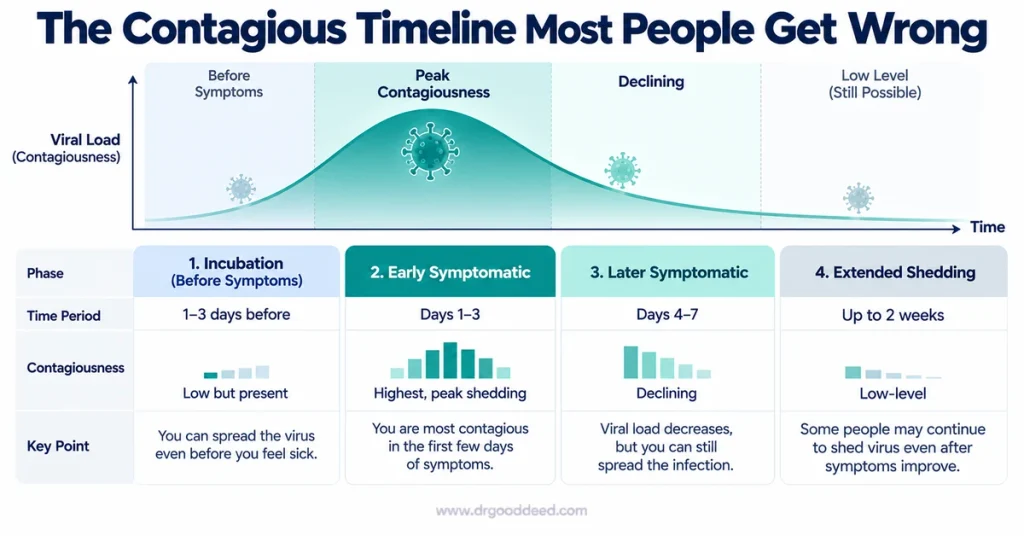
Contagious before symptoms is not a rare exception, it’s the normal course of a URI. The rhinovirus incubation period runs roughly one to three days, and viral shedding, meaning active release of infectious virus from your nose and throat, typically begins about a day before congestion or a sore throat shows up.
- You can pass the virus to a coworker or family member while you still feel completely fine, because the virus is replicating in your nasal lining before your immune response produces noticeable symptoms.
- This pre-symptomatic window is one reason colds spread so efficiently through households and workplaces, since nobody is intentionally avoiding an apparently healthy person.
- Once symptoms appear, viral load in nasal secretions is usually highest, making days one through three of visible illness the point of greatest transmission risk.
- Practical takeaway: routine hand hygiene during cold season protects you even when nobody around you looks sick, since exposure often happens before anyone knows they’re contagious.
How Long Does Contagiousness Last?
The URI contagious period generally runs about a week, though the tail end varies. Viral shedding is highest in the first two to three days of symptoms, then gradually tapers as the immune system clears the infection.
| Phase | Timing | Contagiousness Level |
| Incubation | 1 to 3 days before symptoms | Low but present, especially in the final 24 hours |
| Early symptomatic | Days 1 to 3 of illness | Highest, peak viral shedding |
| Later symptomatic | Days 4 to 7 | Declining, still contagious |
| Extended shedding | Up to 2 weeks | Low-level, more common in children and immunocompromised people |
Most healthy adults stop shedding meaningful amounts of virus within seven to ten days, but low-level shedding can persist longer in young children or anyone with a weakened immune system.
Does the Contagious Period Vary by Virus?
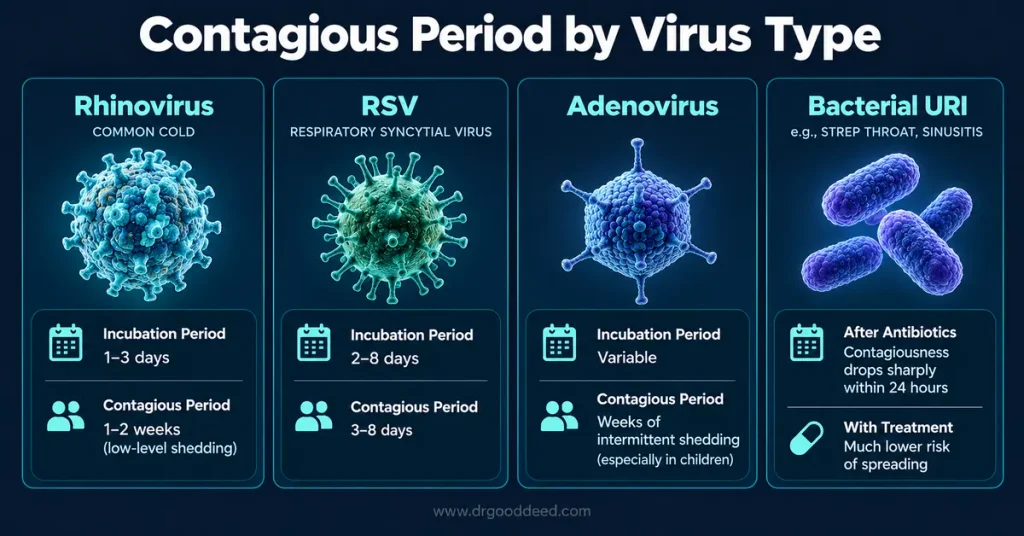
Rhinovirus, RSV, and adenovirus each carry distinct incubation periods and shedding patterns, which is genuinely useful to know if you’re trying to estimate your own risk to others.
- Rhinovirus (the leading cause of the common cold): Incubation of about one to three days, peak contagiousness in the first three days of symptoms, with detectable shedding sometimes continuing for one to two weeks at low levels.
- RSV (respiratory syncytial virus): Incubation of roughly two to eight days, and most people remain contagious for about three to eight days, longer in infants and people with compromised immunity.
- Adenovirus: Can shed intermittently for weeks after symptoms resolve, particularly in children, since it persists longer in respiratory and gastrointestinal tissue than rhinovirus does.
- Bacterial URIs (less common, sometimes following a viral infection): Contagiousness often drops sharply within 24 hours of starting an appropriate antibiotic, unlike viral URIs, which have no medication that shortens the shedding window.
How to Reduce the Risk of Spreading It
You can’t eliminate risk entirely, since pre-symptomatic transmission is part of how URIs work, but specific habits meaningfully cut down how much virus you pass on.
- Wash hands with soap and water for at least 20 seconds, especially after coughing, sneezing, or blowing your nose, since hand contact drives more transmission than airborne spread alone.
- Cough or sneeze into your elbow rather than your hands, which keeps virus off the surfaces you touch next.
- Disinfect shared, frequently touched surfaces such as doorknobs, phones, and keyboards during the first few contagious days.
- Keep distance from infants, older adults, and anyone immunocompromised, since a URI that’s mild for you can trigger serious complications for them; this is the same reasoning behind guidance on is COPD contagious, where a routine cold can set off a dangerous flare-up.
- Avoid sharing drinks, utensils, or towels while symptomatic, since these carry secretions directly.
Pro Tip: Replace your toothbrush after a URI clears, and avoid reusing the same tissue box across multiple sick days in a household, since surfaces near your face stay contaminated longer than people usually assume, occasionally for days rather than hours.
When to See a Doctor
Most URIs resolve on their own within seven to ten days with rest, fluids, and over-the-counter symptom relief.
- Fever above 102°F that doesn’t respond to standard fever reducers, or any fever lasting more than three days.
- Chest pain, shortness of breath, or wheezing, which can signal the infection has moved into the lower airway.
- Symptoms lasting beyond 10 days without improvement, or symptoms that improve and then suddenly worsen again.
- Severe sinus pain, facial swelling, or thick discolored discharge accompanied by high fever, which can point toward a bacterial sinus infection.
FAQs
Can you be contagious without symptoms?
Yes. Most people begin shedding virus about one to two days before symptoms start. This pre-symptomatic window explains why URIs spread so easily in households and workplaces before anyone realizes they’re sick.
Is a URI the same as the flu?
No. Influenza is a distinct virus with its own incubation period and often more severe systemic symptoms like high fever and body aches. URI vs flu contagious periods differ too: flu shedding can start slightly earlier and hit harder within 24 hours of symptoms.
How long should you stay home from work or school?
CDC guidance says stay home until symptoms improve and you’ve been fever-free for 24 hours without medication. When you can I go back to work with a cold depends on this, not a fixed day count, since improvement timing varies by person.
Can pets catch a URI from you?
No, human rhinoviruses and most cold-causing viruses don’t infect dogs or cats. Pets have their own species-specific respiratory viruses, so a family cold won’t typically spread to a household pet.
Does wearing a mask actually help prevent spread?
Yes. A well-fitted mask reduces the droplets you release when coughing or sneezing, cutting transmission risk to others nearby. It’s most useful during your peak contagious days, roughly the first three days of symptoms.
Sources
- Centers for Disease Control and Prevention: Respiratory Virus Guidance link
- Harvard Health Publishing: The Common Cold link
- Montana Department of Public Health and Human Services: Common Cold Fact Sheet link
- GoodRx Health: How Long Is a Cold Contagious? link
- Keck Medicine of USC: Are Upper Respiratory Infections Contagious? link
- National Center for Biotechnology Information: Duration of RSV Shedding in a Community Study of Kenyan Children link
- National Center for Biotechnology Information: Influence of Age, Severity, and Co-infection on RSV Shedding Duration link
- Healthline: Incubation Period for a Cold link
- National Council on Aging: RSV Prevention, How It Spreads and How to Stay Safe link
- Mayo Clinic: Common Cold Symptoms and Causes link
Medical Disclaimer: This article is for general information only and is not medical advice. It does not replace a diagnosis, treatment plan, or guidance from a qualified healthcare professional. Always talk to your doctor about your own symptoms and before starting, stopping, or changing any treatment. If you think you may be having a medical emergency, call 911 or go to your nearest emergency room.