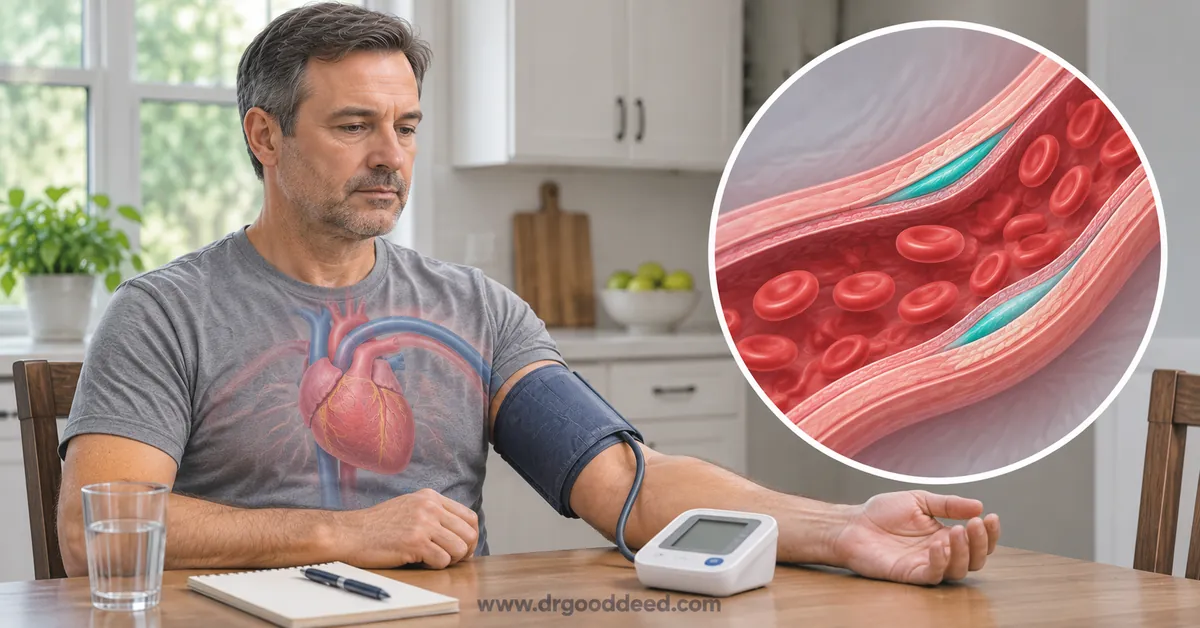

A blood pressure reading of 135/85 mmHg is generally not an emergency, but it is worthwhile keeping an eye on it. Whether or not it is considered to be high blood pressure depends on the guidelines being followed and on the place where the reading is taken.
In the United States, it is classified as stage 1 hypertension, while in the United Kingdom, it is below the clinic threshold but reaches the threshold for a high average of home blood pressure. Taking multiple readings will help to decide if any lifestyle changes, medical assessments, or treatments are needed.
Key Takeaways
- 135/85 blood pressure is stage 1 hypertension by US guidelines and borderline by UK guidelines, so confirm it with home readings.
- In the UK, a home-averaged blood pressure of 135/85 or higher is regarded as meeting the threshold for hypertension.
- A single measurement does not allow a diagnosis to be made; you should take your blood pressure correctly over several days.
- Changing your way of life can help reduce blood pressure, whereas the choice about whether to take medication will be based on your cardiovascular risk and medical history.
- A blood pressure reading of 135/85 is not an emergency; if the reading is above 180/120 together with concerning symptoms, emergency care is required.
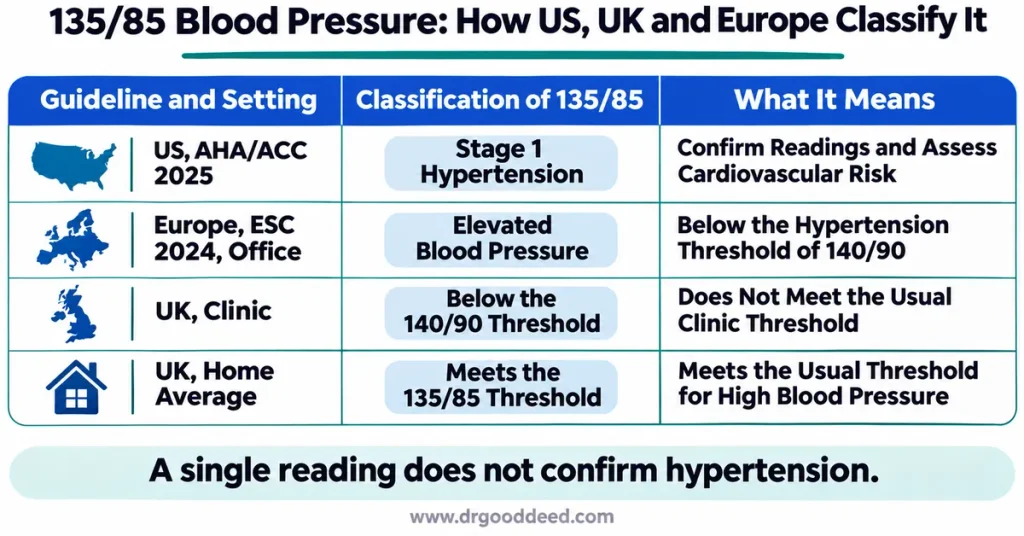
| Guideline and setting | Classification of 135/85 | What it means |
| US, AHA/ACC 2025 | Stage 1 hypertension | Confirm readings and assess cardiovascular risk. |
| Europe, ESC 2024, office | Elevated blood pressure | Below the hypertension threshold of 140/90. |
| UK, clinic | Below the 140/90 threshold | Does not meet the usual clinic threshold for hypertension. |
| UK, home average | Meets the 135/85 threshold | Meets the usual threshold for high blood pressure. |
Is 135 Over 85 High Blood Pressure Bad?
Is 135 over 85 high blood pressure bad? It depends on the guideline and where you measured it. The guidelines of the United States consider it to be stage 1 hypertension, those of Europe regard it as elevated blood pressure, and the advice from the UK makes use of different thresholds for readings taken in a clinic and for readings taken at home.
Blood pressure categories assist healthcare professionals in identifying possible risks, but that doesn’t mean the risk suddenly rises at a particular value.
- In the United States, the 2025 guidelines from the American Heart Association (AHA) and the American College of Cardiology (ACC) consider a systolic pressure between 130 and 139 or a diastolic pressure between 80 and 89 to be stage 1 hypertension, and a pressure reading of 135/85 is included in this category.
- Europe: The 2024 European Society of Cardiology (ESC) guidelines call office readings of 120 to 139 systolic or 70 to 89 diastolic elevated blood pressure. Hypertension starts at 140/90.
- In the United Kingdom, the NHS and NICE guidelines usually consider high blood pressure to be 140/90 or above when measured in a clinic and 135/85 or above when measured at home.
- The term “pre-hypertension” was retired by the 2017 US guideline and is no longer used as a diagnostic category.
A single reading of 135/85 does not confirm hypertension. However, repeated elevated readings deserve attention because sustained high blood pressure can increase the risk of heart disease, stroke, and kidney disease.
What Does Stage 1 Hypertension Mean at 135/85?
According to the US guidelines, stage 1 hypertension is defined as blood pressure being in the range of 130 to 139 mm Hg for the systolic reading or 80 to 89 mm Hg for the diastolic reading. Even if you are feeling healthy, a continued high blood pressure can lead to a greater long-term risk of cardiovascular problems.
Blood pressure has two measurements:
- Systolic pressure (135): The pressure in your arteries when your heart contracts.
- Diastolic pressure (85): The pressure in your arteries between heartbeats.
At 135/85, both numbers fall within the US stage 1 hypertension range. However, the reading alone does not determine your overall health risk or whether you need medication.
The 2025 US guidelines consider additional factors, including age, cardiovascular disease, diabetes, kidney disease, and estimated cardiovascular risk. Healthcare professionals can use the PREVENT equations to estimate 10-year and 30-year cardiovascular risk in adults aged 30 to 79.
These assessments help determine whether lifestyle changes alone are appropriate or whether medication should also be considered.
The main concern is consistently elevated blood pressure, not one isolated measurement. Confirming your readings and discussing them with a healthcare professional helps you understand your next steps.
Do Home Blood Pressure Readings Confirm 135/85?
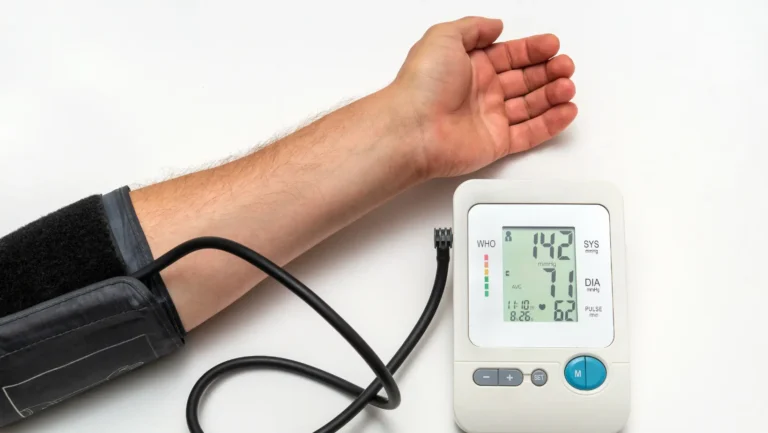
Home blood pressure monitoring can be used to find out if your readings stay high when you are at home. In the UK, a home average of 135/85 or above is considered to meet the standard hypertension threshold, whereas in the United States clinicians base their interpretation of home readings on the US diagnostic guidelines.
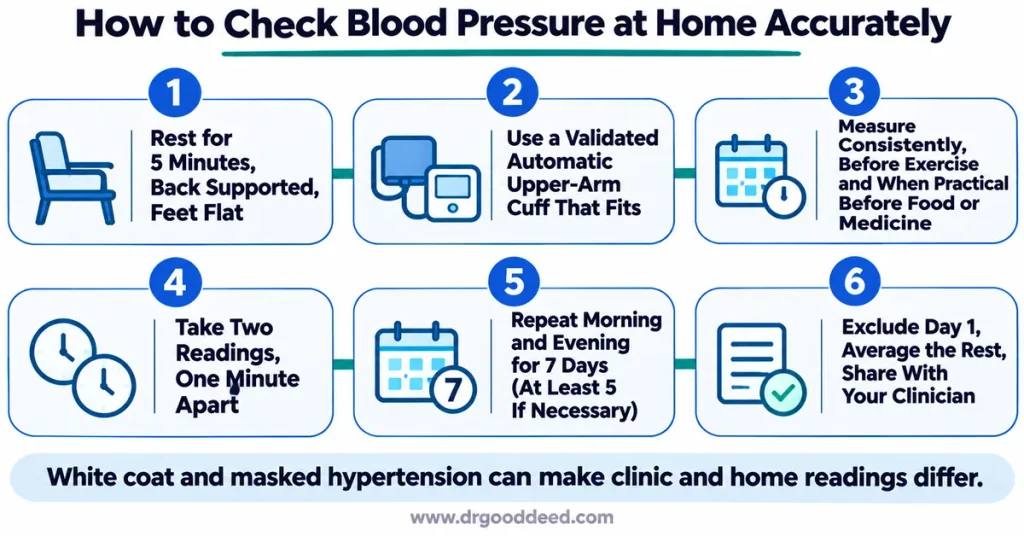
Follow these steps to measure your blood pressure accurately:
1. Rest for five minutes. Sit quietly with your back supported and feet flat on the floor.
2. Use the right monitor. Choose a validated automatic upper-arm cuff that fits correctly.
3. Measure consistently. Take readings before exercise and, when practical, before food or blood pressure medication, following your clinician’s instructions.
4. Take two readings. Measure once, wait one minute, and measure again.
5. Repeat morning and evening. Continue for seven days, or at least five days if necessary.
6. Calculate the average. Exclude the first day’s readings and average the remaining measurements.
Give your results to your healthcare professional. While a home blood pressure reading average of 135/85 or above is generally in line with the standard threshold for hypertension in the UK, the interpretation will vary depending on the guidelines in question and your particular medical situation.
Two conditions can also explain differences between clinic and home readings:
- White coat hypertension refers to a situation in which a person’s blood pressure is high when they are in a medical environment but lower when they are outside of it.
- Masked hypertension: Although the blood pressure readings taken in the clinic are normal, the readings obtained outside of the clinic are high.
Your clinician may recommend 24-hour ambulatory blood pressure monitoring to confirm the diagnosis.
For further guidance, visit the home blood pressure monitor guide.
What Can Push a Reading to 135/85?
Several factors can temporarily raise blood pressure or affect measurement accuracy. A reading of 135/85 may reflect persistent elevation, measurement errors, or a combination of factors.
Common causes include:
- An incorrect method of measurement, such as using a cuff that is too small, having the legs crossed, or not having the back supported—can have an effect on the result.
- Consuming too much sodium can lead to high blood pressure.
- The consumption of alcohol can lead to increased blood pressure if it is done on a regular or heavy basis.
- Some medicines, for example NSAIDs like ibuprofen and naproxen, can cause an increase in blood pressure in certain individuals.
- Activity or stress recently experienced: Exercise, caffeine, and stress may temporarily influence the readings.
If your reading is higher than expected, rest and repeat it using the correct technique. If you take blood pressure medication, continue taking it as prescribed. Ask your doctor or pharmacist before changing medication or regularly using medicines that may affect blood pressure.
How to Lower 135/85 Blood Pressure
Lifestyle modifications may help to lower blood pressure from 135/85 and decrease long-term cardiovascular risk; the most appropriate method will vary according to your health situation, your present treatment, and your other risk factors.
- Take steps to manage your weight: if your healthcare professional advises you to do so, then aim to achieve a healthy weight.
- The 2025 US guideline suggests that less than 2,300 mg of sodium should be consumed each day, with some experts advising a target of around 2,000 mg depending on individual requirements.
- Adopt a DASH-style diet by increasing your intake of vegetables, fruits, whole grains, legumes, and other foods high in nutrients.
- Make sure to exercise by establishing a regular routine that involves walking, cycling, or some other appropriate aerobic activity.
- Cut down on alcohol: reducing the amount of alcohol you consume can help with better control of blood pressure.
- Check your medications: Ask either your doctor or your pharmacist if any of the medicines could be causing your readings to rise.
- Keep track of your progress by recording your home blood pressure and then providing the results at your follow-up appointments.
While foods high in potassium may be of some help, potassium supplements and salt substitutes are not appropriate for everybody, particularly for individuals who have kidney disease or are on certain medications. One should obtain medical advice before using them.
For Americans who have stage 1 hypertension, the 2025 guidelines suggest that a review should take place after three to six months of making lifestyle changes if medication is not originally prescribed. However, your doctor may decide to have the situation reviewed earlier based on your risk level.
When Is Medicine Needed at 135/85?
A blood pressure medication is not necessarily required just because your reading is 135/85; whether or not you should receive treatment will depend on your confirmed readings, your cardiovascular risk, any existing medical conditions, and how you respond to making lifestyle changes.
Under the 2025 US guidelines, medication may be recommended for adults with stage 1 hypertension who do not have cardiovascular disease, diabetes, or chronic kidney disease if their estimated 10-year cardiovascular risk using the PREVENT equations is 7.5% or higher.
- For adults at lower estimated risk, medication is recommended if blood pressure remains at 130/80 or higher after three to six months of lifestyle changes.
- People with cardiovascular disease, diabetes, or chronic kidney disease may need medication sooner, depending on their individual circumstances.
- In the UK, treatment decisions follow applicable NICE guidance and consider confirmed blood pressure readings, age, cardiovascular risk, and other health conditions.
If you already take blood pressure medication and your reading is 135/85, continue taking it as prescribed. Do not skip doses, stop treatment, or change your dose without consulting your prescriber.
When Is a Blood Pressure Reading an Emergency?
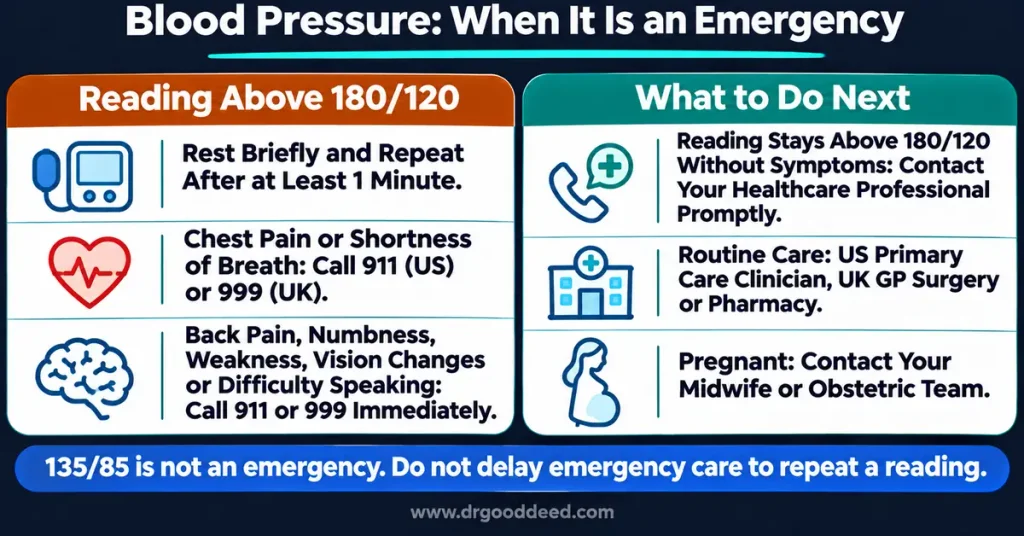
A blood pressure reading of 135/85 is not an emergency, but if the reading is above 180/120, it needs to be dealt with promptly, especially when symptoms are present, which could point to a medical emergency.
- Reading above 180/120: Rest briefly and repeat the measurement after at least one minute.
- Chest pain or shortness of breath: Call 911 in the United States or 999 in the United Kingdom.
- Back pain, numbness, weakness, vision changes, or difficulty speaking: Call 911 or 999 immediately.
- Reading remains above 180/120 without symptoms: Contact your healthcare professional promptly for advice.
Do not delay emergency care to repeat a measurement if you have concerning symptoms.
For routine care, see your primary care clinician in the US. In the UK, your GP surgery or a pharmacy can check your blood pressure, and the NHS advises a check if you are 40 or over and have not had one in the last 5 years. If you are pregnant, contact your midwife or obstetric team about any raised reading.
Frequently Asked Questions
Is 135/85 normal for my age?
For American adults, a blood pressure reading of 135/85 is considered stage 1 hypertension no matter what their age. In the UK, the thresholds for adults aged 80 and over are generally 150/90 when measured in a clinic and 145/85 for a home average.
Which number matters more, 135 or 85?
The two figures are important; according to US guidelines, stage 1 hypertension is defined as either a systolic reading between 130 and 139 or a diastolic reading between 80 and 89.
Can 135/85 go back to normal without medicine?
Changes to your way of life can indeed cause a reduction in blood pressure in certain individuals. However, the results will differ from person to person, and medication might still be needed according to your cardiovascular risk and the results of your subsequent measurements.
Is a wrist or finger monitor reliable for a 135/85 reading?
It is generally better to use an automatic upper-arm monitor with the right cuff size. However, wrist monitors can be appropriate in certain cases provided they are used correctly; finger monitors are not recommended when measuring blood pressure routinely.
Sources
1. American Heart Association. Top Things to Know: 2025 High BP Guideline. link
2. National Institute for Health and Care Excellence (NICE). Hypertension in adults: evidence review for blood pressure targets. 2022. link
3. NHS. Blood pressure test. link
4. European Society of Cardiology. 2024 ESC Guidelines for the management of elevated blood pressure and hypertension. European Heart Journal, 2024. link
5. AHA/ACC. 2025 Guideline for the Prevention, Detection, Evaluation and Management of High Blood Pressure in Adults. Journal of the American College of Cardiology, 2025. link
Medical Disclaimer: This article is for general information only and is not medical advice. It does not replace a diagnosis, treatment plan, or guidance from a qualified healthcare professional. Always talk to your doctor about your own symptoms and before starting, stopping, or changing any treatment. If you think you may be having a medical emergency, call 911 or go to your nearest emergency room.