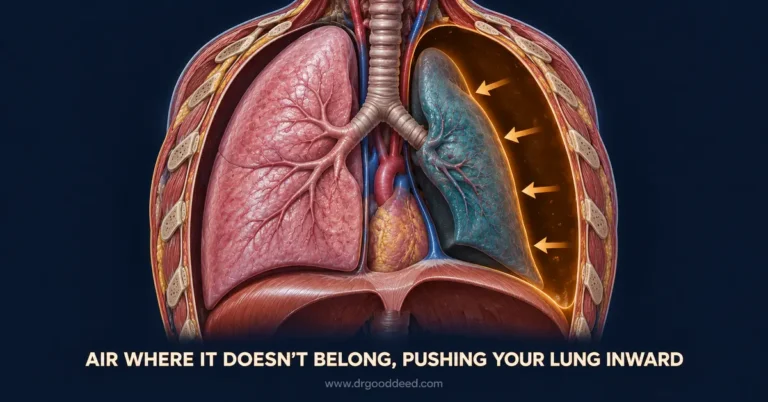

Coughing after eating happens when food, liquid or stomach contents irritate the throat and airway. Swallowing too fast or a crumb going down the wrong way can cause an occasional cough, but frequent coughing during or after meals may be due to acid reflux, a swallowing problem, asthma, postnasal drip or a food allergy.
Sometimes food or liquid goes down the windpipe (aspiration), which can raise the risk of lung infections. When the cough starts, which foods make it worse and what other symptoms come with it can show when you need a medical check.
Key Takeaways
- Coughing after eating usually comes from reflux, a swallowing problem, asthma or a food allergy; frequent coughing with meals needs a doctor’s check.
- Coughing as you swallow, especially with liquids, can point to a swallowing problem.
- A wet or gurgling voice after eating or drinking can be a sign of aspiration.
- Reflux can cause a cough even without heartburn.
- Coughing with hives, throat swelling or trouble breathing can be a serious allergic reaction.
- If you cough with meals regularly, lose weight or get repeated chest infections, see a doctor.
- Severe trouble breathing or suspected anaphylaxis needs emergency care: call 911 (US) or 999 (UK).
| What to track | What to note |
| Timing | Whether coughing starts during a meal, immediately after swallowing, or later |
| Food consistency | Whether it occurs with solid foods, thin liquids, or both |
| Frequency | How often it happens and whether it occurs after every meal |
| Associated symptoms | Heartburn, choking, wheezing, a wet voice, or throat irritation |
| Recent changes | When the cough started and whether it is worsening |
| Medical history | Existing asthma, reflux, neurological conditions, or swallowing difficulties |
Why Does Coughing Occur After Eating?
Swallowing is a complex process that requires movements of the mouth, throat and esophagus. The airway needs to be kept clear as food and liquid pass down to the stomach.
The cough reflex has a protective role in clearing irritating substances from the airway. Coughing can result from an irritated throat from reflux or if a food particle has been inhaled into the airway.
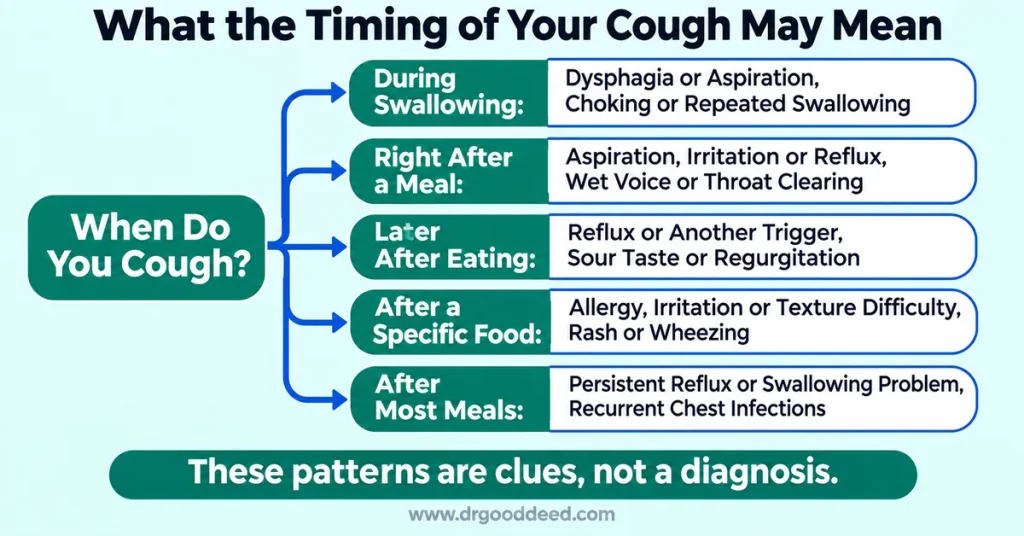
Timing tells a lot. Coughing when swallowing can indicate a swallowing difficulty, and coughing after swallowing or during the meal can indicate reflux or other causes. These patterns are not diagnostic, however.

What Are the Most Common Causes of Coughing After Eating?
1. Acid Reflux
Gastroesophageal reflux disease (GERD) occurs when stomach contents repeatedly flow back into the esophagus. This can irritate the throat and trigger a cough. Some people also have laryngopharyngeal reflux (LPR), where reflux occurs in the throat or voice box.
Reflux-related cough may come with a sour taste, regurgitation, hoarseness or throat clearing, even without heartburn.
Reflux two or more times a week can be a sign of GERD (Medical News Today), so speak with a doctor if reflux is frequent or the cough does not go away. If you also get other symptoms after meals, read why your stomach may hurt after eating.
2. Swallowing Problems (Dysphagia)
Dysphagia is the term for problems with swallowing. It can cause problems with food moving from the mouth to the esophagus, or from the esophagus to the stomach.
Possible signs include:
- Choking or coughing when eating.
- Difficulty swallowing food.
- Swallowing several times for one mouthful.
- A wet or gurgling voice after drinking.
- Trouble swallowing solids, liquids or both.
Dysphagia may be caused by neurological disorders, muscle weakness and structural abnormalities. If symptoms repeat, it’s time to seek medical evaluation instead of making changes to the diet.
3. Aspiration and Silent Aspiration
Aspiration occurs when food, liquid, saliva or stomach juices go down the wrong way and into the airway. This can cause coughing right after swallowing. About half of people with dysphagia aspirate (Cedars-Sinai). Other potential causes include vocal fold weakness and neurological conditions such as stroke or Parkinson’s disease.
Aspiration pneumonia is a lung infection that can follow repeated aspiration. WebMD lists a fever within 30 minutes of eating as one warning sign and says pneumonia can develop over 1 to 2 days. Fever, breathing problems and frequent chest infections are important warning signs.
Silent aspiration is when food or liquid goes down the wrong way without a cough or other obvious sign. No cough does not mean swallowing is safe, so anyone with a known swallowing difficulty should be assessed.
4. Food Allergies
Some coughs are caused by a food allergy when the body’s immune system is stimulated by the presence of a specific food. Symptoms may also include itching, hives, swelling of lips or tongue, vomiting, wheezing or throat tightening.
Coughing, itchiness or sneezing does not necessarily indicate an allergy. If someone has a cough, plus swelling in the throat, a lot of difficulty breathing or faints after eating, however, it might be anaphylaxis. In the United States, call emergency services (911) and use prescribed emergency epinephrine if available; in the United Kingdom, call emergency services (999) or go to A&E.
5. Asthma or Postnasal Drip
An asthma cough after eating may happen when food causes symptoms in the airway. Some foods contain sulfites which may aggravate asthma in susceptible individuals. The cough can be accompanied by wheezing, chest tightness and difficulty breathing.
Postnasal drip can let mucus pool at the back of the throat, which can cause coughing or frequent throat clearing. If symptoms keep coming back, a doctor can help tell breathing causes apart from swallowing causes. To learn how asthma is measured, read about the peak flow meter vs spirometer.
6. Spicy Foods, Hot Drinks, or Dry Foods
Very hot drinks and spicy foods can irritate the throat. Some individuals may also have trouble swallowing foods that are dry or crumbly.
If you often cough with certain food textures, avoiding them may not solve the problem. If you choke or have a wet voice with meals, a swallowing assessment may be needed.
What Does the Timing of Your Cough Mean?
| When coughing occurs | Possible explanation | Clues to notice |
| During swallowing | Dysphagia or aspiration | Choking or repeated swallowing |
| Immediately after a meal | Aspiration, irritation, or reflux | Wet voice or throat clearing |
| Later after eating | Reflux or another meal-related trigger | Sour taste or regurgitation |
| After a specific food | Allergy, irritation, or texture difficulty | Rash, wheezing, or swallowing difficulty |
| After most meals | Persistent reflux or swallowing dysfunction | Recurrent symptoms or chest infections |
A wet cough after eating or a wet-sounding voice requires particular attention when it occurs repeatedly.
How Do Doctors Diagnose Coughing After Eating?
The clinician will ask about the onset of cough, whether the cough is provoked by liquids or solids, and whether frequent heartburn, choking, wheezing, or weight loss are present.
Evaluation may consist of:
- Clinical swallowing assessment: A trained clinician or speech-language pathologist checks how you swallow.
- Videofluoroscopic swallowing study (modified barium swallow): Moving X-ray images show food and liquid as you swallow.
- Fiberoptic endoscopic evaluation of swallowing (FEES): A flexible endoscope is used to help evaluate swallowing and/or aspiration.
- Reflux testing: pH or pH-impedance testing may be considered when needed.
- Allergy testing: A clinician may recommend targeted tests based on your reaction history.
- Laryngoscopy: Direct examination of the vocal folds and larynx to evaluate throat structure and mobility.
Not all the tests are required for all people. The correct investigation will be based on the suspected cause.
How Can You Reduce Coughing After Eating?
Treatment is based on the cause. These measures may be used to help decrease irritation, but do not replace evaluation for swallowing problems and should not be used if there is a suspected swallowing problem.
- Slow down, take small bites and chew thoroughly.
- Avoid talking while you chew and swallow.
- Sit up straight when eating, and after eating if reflux is suspected.
- Record foods, drinks, symptoms and when the cough starts.
- Avoid the foods that you know trigger your reflux, rather than cutting whole food groups.
- Follow your prescribed treatment for asthma, reflux or allergies.
If nighttime symptoms persist, see our guide on how to sleep with a cough.
When Should You Worry About Coughing After Eating?
Most coughing after eating is not an emergency, but some symptoms need emergency care and others need a prompt doctor visit.
When Is It an Emergency?
If you have the following symptoms, seek emergency help:
- Severe trouble breathing, choking that does not clear, or being unable to speak.
- Food stuck in your throat so that you cannot swallow saliva.
- Swelling of the throat or tongue, wheezing or fainting after being exposed to a suspected allergen.
For these emergencies, call 911 or go to the emergency department in the US, or call 999 or go to A&E in the UK.
When Should You Schedule a Medical Appointment?
If you have these symptoms, schedule a medical evaluation:
- Coughing or choking while eating or drinking more than once.
- Trouble swallowing or pain when swallowing.
- A wet or gurgling voice after eating or drinking.
- Repeated chest infections, weight loss or symptoms that do not improve.
- A cough that lasts more than 2 weeks (Medical News Today), or blood in your mucus.
In the UK, ask for an urgent GP appointment or contact NHS 111 if you cough or choke while eating or drinking (NHS). In the US, contact your primary care provider.
If you have chest pain, read our guide to chest pain while coughing, and get urgent care for severe or worrying chest pain. If you smoke and have a long-lasting cough, ask your doctor about a COPD check and learn more about COPD testing.
If your child often coughs, chokes or has breathing problems when eating or drinking, see a doctor.
Frequently Asked Questions
Why Do I Cough After Eating but Have No Heartburn?
Sometimes, reflux can irritate the throat but not result in the typical heartburn. Swallowing difficulties, asthma, and allergies are other possibilities. Recurrent symptoms should be evaluated to determine the cause.
Why Do I Cough When Drinking Water?
Coughing often when you drink water may be a sign of a swallowing problem or aspiration. See a doctor, especially if it also happens with other drinks or food.
Why Do I Cough After Eating Spicy Food?
Spicy foods can irritate the throat or trigger reflux. If it happens often, or comes with choking, wheezing or trouble swallowing, see a doctor.
Can Coughing After Eating Be a Sign of Aspiration?
Yes. When food or drink goes into the airway, it can cause coughing during or after swallowing. Silent aspiration can happen with no cough at all.
Is Coughing After Eating a Sign of GERD?
It can be. GERD is more likely when the cough comes with regurgitation, a sour taste or hoarseness, but coughing alone does not confirm GERD.
Sources
NHS, Dysphagia (Swallowing Problems). link
NIDDK, Symptoms and Causes of GER and GERD. link
NIDCD, Swallowing Disorders. link
Cedars-Sinai, Aspiration From Dysphagia. link
Cedars-Sinai, Dysphagia: What Happens During a Bedside Swallow Exam. link
AAAAI, Food Allergy. link
AAAAI, Anaphylaxis. link
American Lung Association, Asthma and Nutrition. link
NHS, Cough. link
WebMD, What Is Aspiration? link
Medical News Today, Why Do I Cough After I Eat? link
Medical Disclaimer: This article is for general information only and is not medical advice. It does not replace a diagnosis, treatment plan, or guidance from a qualified healthcare professional. Always talk to your doctor about your own symptoms and before starting, stopping, or changing any treatment. If you think you may be having a medical emergency, call 911 or go to your nearest emergency room.