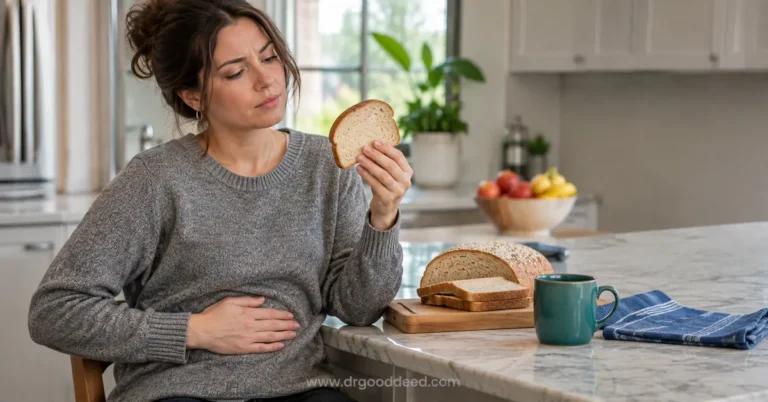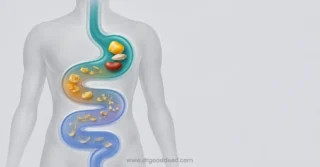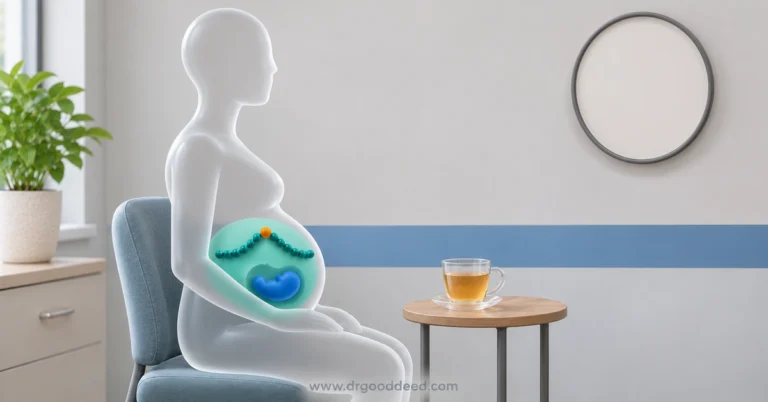


If you can’t burp, it could be R-CPD, a condition where a muscle at the top of your esophagus won’t relax to let swallowed air back up. It’s rare, and an ENT specialist confirms it. An injection into that muscle can bring burping back.
Key Takeaways
- If you can’t burp, it could be R-CPD, a treatable muscle problem that often also causes gurgling, bloating and gas.
- The cause is unknown, but the muscle at the top of the esophagus fails to relax to let air out (Cleveland Clinic, 2025).
- Diagnosis belongs to an ENT specialist and rests mainly on your symptoms, once other problems are ruled out (Miller et al., 2024).
- Chest pain with shortness of breath or faintness means 911. Don’t write it off as trapped gas (CDC, 2024).
Can’t Burp? What R-CPD Means
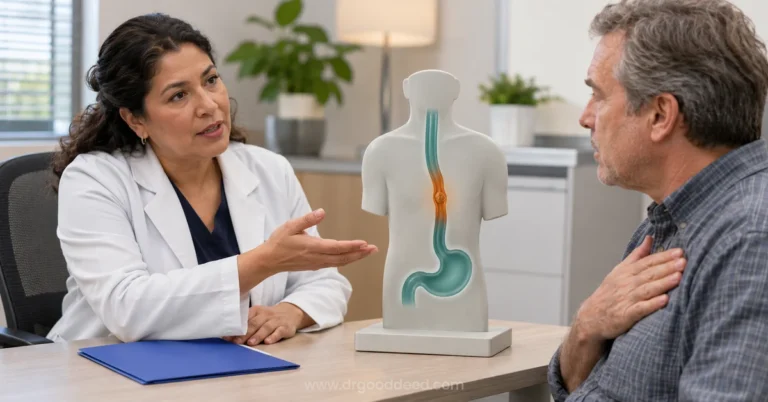
If you can’t burp, it could be R-CPD, short for retrograde cricopharyngeus dysfunction, in which the upper esophageal sphincter stays closed when air needs to come back up. You may also see it spelled RCPD, or called no-burp syndrome.
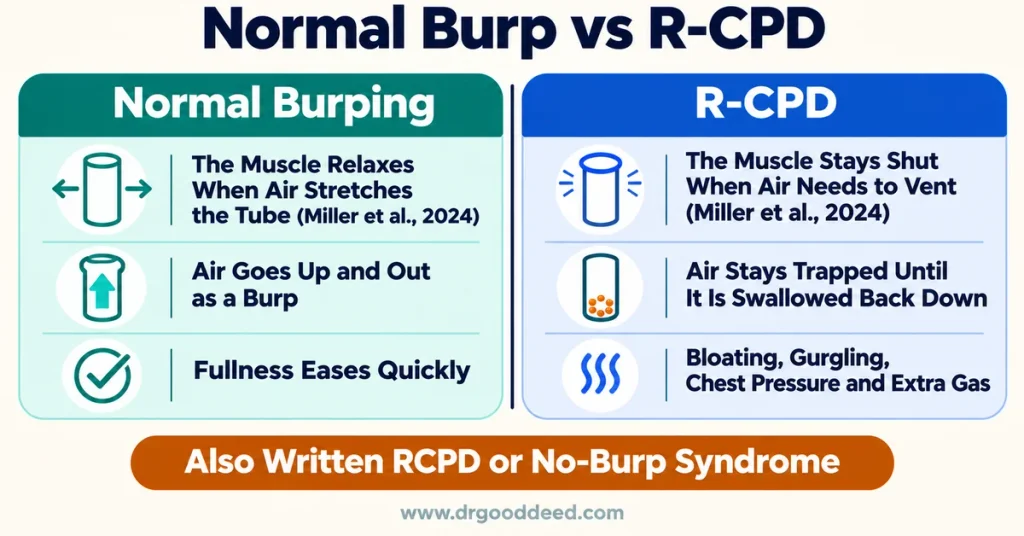
| Feature | Normal burping | R-CPD |
| The muscle | The cricopharyngeus, a ring of muscle at the top of the esophagus (the upper esophageal sphincter), relaxes when air stretches the esophagus (Miller et al., 2024) | It stays shut when air needs to vent (Miller et al., 2024) |
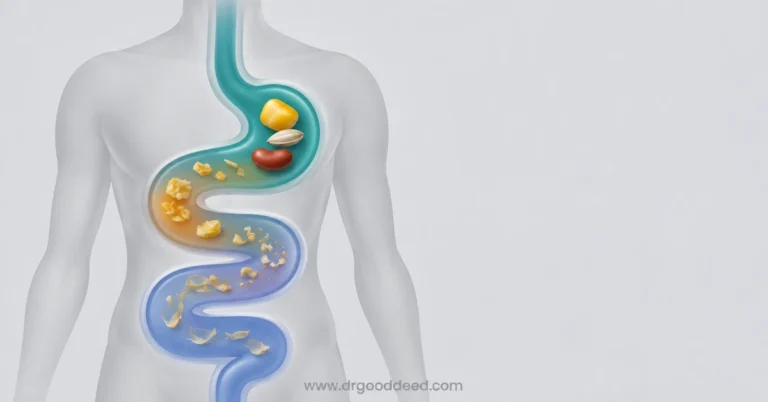
| Where the air goes | Up and out as a burp | Stays trapped in the esophagus, pressing on the chest, until it’s swallowed back down (Miller et al., 2024) |
| What you notice | Fullness eases quickly | Bloating, gurgling, chest pressure and extra gas |
People with R-CPD usually cannot burp at all, and that is the defining sign. Swallowing stays normal, though: Miller and colleagues (2024) describe R-CPD as an inability to burp without trouble swallowing.
Burping that comes with stomach pain is a separate problem, covered in our guide to abdominal pain and burping.
Signs and Symptoms of No-Burp Syndrome
The classic pattern has four parts: you’ve never really been able to burp, your throat or chest gurgles, you feel bloated with pressure in the chest, and you pass a lot of gas (Bastian and Smithson, 2019; Miller et al., 2024).
- Feeling you need to burp but can’t: The air has nowhere to go, so it sits in the esophagus and presses behind the breastbone (Miller et al., 2024).
- Gurgling: If you can’t burp but your throat makes noise, sometimes loud noise, that is a recognized sign too (Bastian and Smithson, 2019). It comes from the lower neck or chest, unlike loud stomach gurgling from the belly.
- Bloating and pressure: Fullness in the abdomen, plus chest or abdominal pain, is common. Bloating has plenty of other causes, which our guide to feeling always bloated covers.
- Extra gas: Air that can’t go up goes down, so a lot of gas gets passed (Bastian and Smithson, 2019).
- Trouble vomiting: Yale Medicine (2024) lists nausea and difficulty vomiting.
- Daily life: Many patients avoid fizzy drinks, and the gurgling and bloating can spill into work and social life (Miller et al., 2024).
Why Some People Can’t Burp
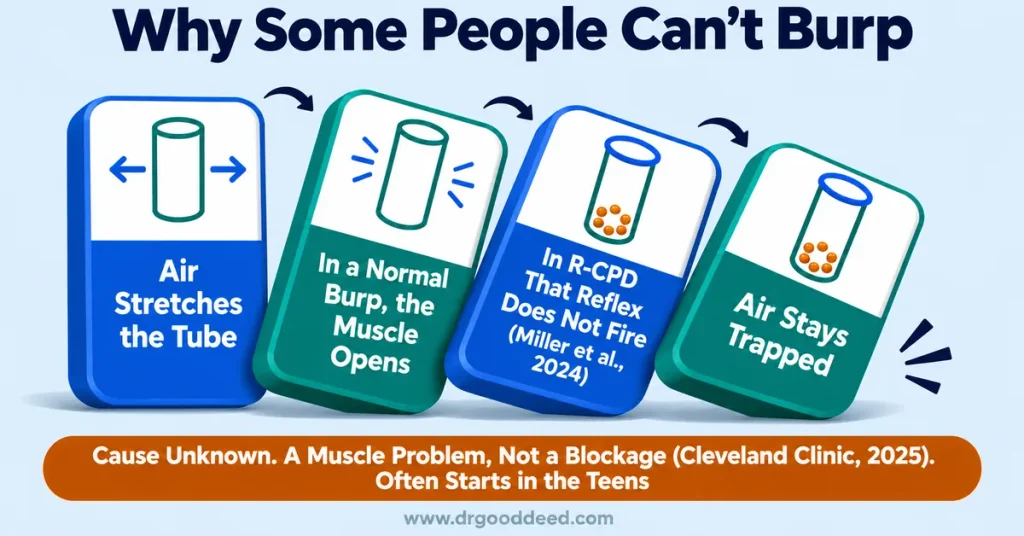
The exact cause of being unable to burp is unknown. Doctors think the muscle isn’t working properly, rather than something blocking the way (Cleveland Clinic, 2025).
- The mechanism: In a normal burp, stretch in the esophagus signals the sphincter to open. In R-CPD that reflex doesn’t fire (Miller et al., 2024).
- Onset: It often starts in the teenage years, and many people wait years for treatment (Miller et al., 2024).
- How common it is: Cleveland Clinic (2025) calls it rare but says case numbers are hard to pin down. Miller and colleagues (2024) report more people turning up after seeing it on social media, often having diagnosed themselves.
- First described: Bastian and Smithson (2019) proposed R-CPD as a syndrome in a series of 51 patients.
How Doctors Diagnose R-CPD
An ENT specialist (an otolaryngologist, or ear, nose and throat doctor) usually diagnoses it from your history after ruling out reflux and swallowing problems (Miller et al., 2024). There is no single test for it.
- History: You describe the missing burp, the gurgling, bloating and gas, and when it began. Diagnosis rests mainly on this (Miller et al., 2024).
- Scope exam: The doctor may pass a thin, flexible scope through your nose or mouth to look at the throat and upper esophagus (Yale Medicine, 2024).
- Tests that rule out other causes: A swallow study (an X-ray video of you swallowing), esophageal manometry (a pressure test of the esophagus) or esophagoscopy (a camera exam of the esophagus) may be done. They usually come back normal in R-CPD.
- Response to treatment: Relief after the injection supports the diagnosis. In the 2019 series, all 51 patients could burp and felt better afterward (Bastian and Smithson, 2019).
Pro Tip: Pay attention to your swallowing. In R-CPD you can’t burp but you swallow normally. If food also sticks, or you’re losing weight or regurgitating, tell the doctor first, since that points to a different swallowing problem that needs its own workup.
R-CPD Treatment Options
The main treatment is an injection that relaxes the cricopharyngeus muscle, given by an ENT specialist, usually under general anesthesia (Cleveland Clinic, 2025). Of all the can’t burp treatment options, it has the best outcome data, though those data have limits.
Muscle-Relaxing Injection
Hoesli and colleagues (2020) reviewed 200 patients treated by a single surgeon. Of those, 99.5% gained the ability to burp and 95% had relief, and 79.9% kept that relief beyond 6 months after one injection. Twelve needed a second injection, 3 had a partial myotomy, and 4 had complications from the scope exam or anesthesia.
How long relief lasts varies: about 3 months (Cleveland Clinic, 2025) or 6 to 12 months and longer (Yale Medicine, 2024). Swallowing trouble can last 1 to 4 weeks (Cleveland Clinic, 2025), and reflux or a lump-in-the-throat feeling may follow (Yale Medicine, 2024).
Surgery on the Muscle
A partial cricopharyngeal myotomy cuts part of the muscle so it opens more easily. Yale Medicine (2024) lists it as an option when the injection does not help enough, and 3 people in the 200-patient series had one after injections (Hoesli et al., 2020).
Other Options
Balloon dilation, which stretches the sphincter with a balloon, and therapy with a speech-language pathologist are also options (Cleveland Clinic, 2025). Ask an ENT specialist what suits you rather than trying tricks on your own.
When to See a Doctor if You Can’t Burp
See your primary care doctor if you can’t burp and deal with bloating, gurgling or pain every day, and ask about an ENT referral. Cleveland Clinic (2025) calls R-CPD not serious, but chest pain is never safe to write off as trapped gas.
- 911: “I can’t burp and my chest hurts” is a common worry. Call 911 if the pain comes with shortness of breath, faintness, or pain in the jaw, neck, back, arm or shoulder. The CDC (2024) lists those as heart attack signs. Our guide to gas pain vs. heart attack explains how to tell them apart.
- ER: If food feels stuck and you can’t swallow, go to the ER. Call 911 if a blockage makes breathing hard (Mayo Clinic, 2026).
- Doctor visit: Weight loss, regurgitation or vomiting along with swallowing trouble needs a visit (Mayo Clinic, 2026). Hoarseness or swallowing trouble that doesn’t go away is a different warning sign; see throat cancer symptoms.
- Primary care doctor: Daily bloating, gurgling or pain. Ask for a referral to an ENT specialist.
If you can’t burp, it could be R-CPD, so ask your primary care doctor about a referral to an ENT specialist who treats swallowing problems.
Frequently Asked Questions
Can RCPD Go Away on Its Own?
Usually not. Most people with R-CPD have had it since childhood or their teens, and treatment is what brings burping back for most (Yale Medicine, 2024; Miller et al., 2024). Yale Medicine (2024) describes it as lifelong in most cases, so an ENT evaluation is the practical next step if it affects your daily life.
What Foods Make RCPD Worse?
Fizzy drinks are the trigger most people report, and many patients change what they drink to limit discomfort (Miller et al., 2024). No proven R-CPD diet exists. A simple food diary can show your own triggers, and you can bring it to your ENT specialist.
How Do You Release Gas With R-CPD?
There’s no proven way to do it at home. Some patients try forcing air up, but doctors recommend an ENT evaluation instead (Miller et al., 2024; Cleveland Clinic, 2025). Air that can’t come up moves down through the gut, which is why gas and bloating are core symptoms.
Is No-Burp Syndrome Dangerous?
No-burp syndrome isn’t considered dangerous, but it can cause real pain and daily distress. Cleveland Clinic (2025) calls it not serious. Chest pain still shouldn’t be written off as trapped gas: the CDC (2024) lists chest pain with shortness of breath or faintness as a heart attack sign, so call 911.
I Can’t Burp, but I Pass a Lot of Gas: Is That R-CPD?
It can be. Excess gas is one of the core symptoms, because air that can’t come up travels down through the gut (Bastian and Smithson, 2019). Gas alone doesn’t prove R-CPD. Look for the full pattern of a lifelong inability to burp, gurgling, and bloating, then ask an ENT specialist.
Sources
- OTO Open, Inability to Belch and Associated Symptoms Due to Retrograde Cricopharyngeus Dysfunction (2019). link
- OTO Open, The Long-term Efficacy of Botulinum Toxin Injection to Treat Retrograde Cricopharyngeus Dysfunction (2020). link
- Journal of Clinical Medicine, Retrograde Cricopharyngeal Dysfunction: A Review (2024). link
- Cleveland Clinic, Think You Have No-Burp Syndrome? Here’s What We Know About This Rare Condition (2025). link
- Yale Medicine, Retrograde Cricopharyngeus Dysfunction: No-Burp Syndrome (2024). link
- CDC, About Heart Attack Symptoms, Risk, and Recovery (2024). link
- Mayo Clinic, Dysphagia: Symptoms and Causes (2026). link
Medical Disclaimer: This article is for general information only and is not medical advice. It does not replace a diagnosis, treatment plan, or guidance from a qualified healthcare professional. Always talk to your doctor about your own symptoms and before starting, stopping, or changing any treatment. If you think you may be having a medical emergency, call 911 or go to your nearest emergency room.