
A peak flow meter and a spirometer both measure lung function, but they serve different purposes. A peak flow meter is a simple, portable device that measures how quickly you can blow air out of your lungs, mainly to monitor conditions such as asthma and detect changes in airflow.
A spirometer is a more advanced device that measures several aspects of breathing, including the amount and speed of air you can inhale and exhale, and is commonly used by healthcare professionals to diagnose and assess conditions such as asthma and COPD.
Key Takeaways
- A peak flow meter measures one number, peak expiratory flow, and is built for daily home tracking of asthma or COPD you already manage.
- A spirometer records several lung values at once, including FEV1 and FVC, and is the test doctors order to diagnose a respiratory condition.
- Spirometry can distinguish obstructive lung disease (asthma, COPD) from restrictive lung disease (pulmonary fibrosis, neuromuscular conditions). A peak flow reading cannot make that distinction.
- A low peak flow reading tells you something is wrong. It does not tell you what is wrong.
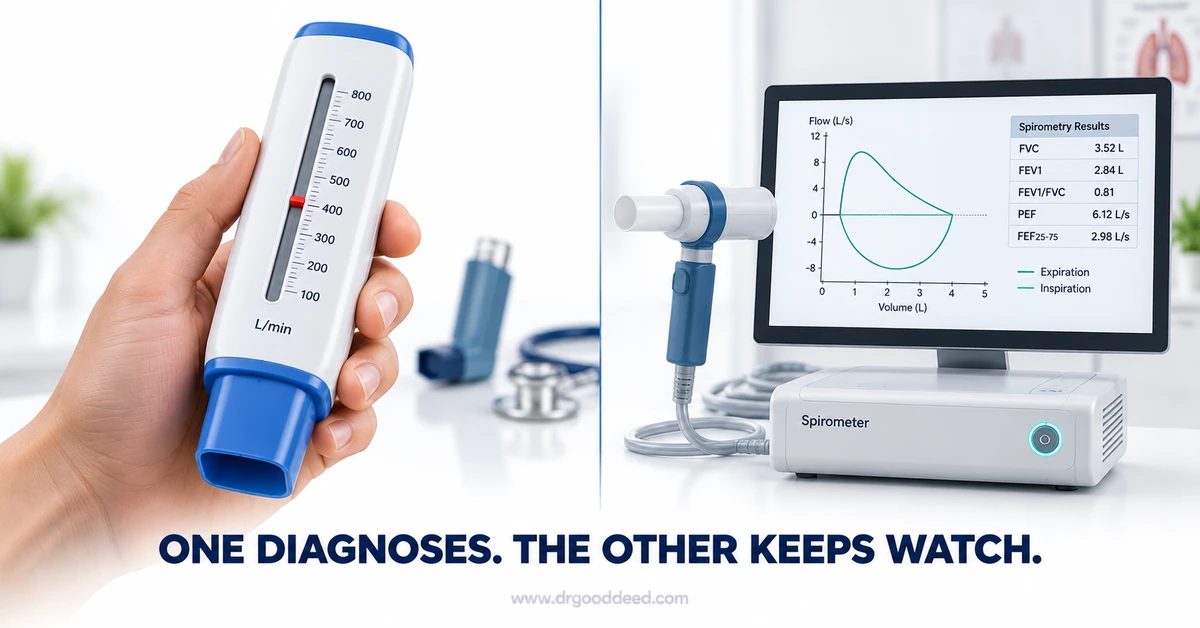
- Both devices matter in respiratory care. One diagnoses, the other keeps watch.
Peak Flow Meter vs Spirometer at a Glance (Comparison Table)
The table below lines up the two devices side by side so you can see where each one fits, whether you’re managing an existing diagnosis at home or heading in for a workup.
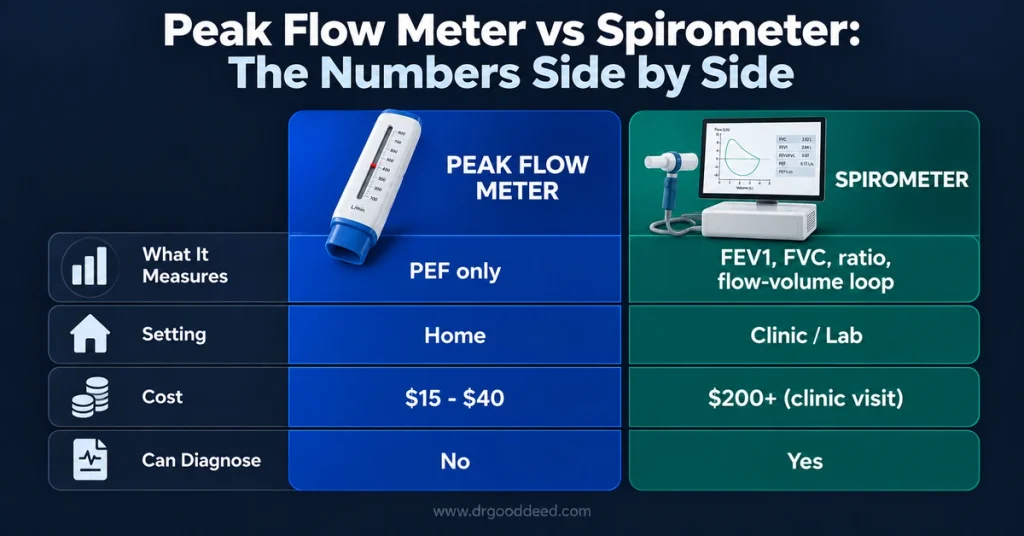
| Feature | Peak Flow Meter | Spirometer |
| What it measures | Peak expiratory flow (PEF) only | FEV1, FVC, FEV1/FVC ratio, and flow-volume patterns |
| Typical setting | Home, self-administered | Clinic, hospital, or pulmonary function lab |
| Cost | $15 to $40, no clinician needed | $200 and up for equipment; usually billed as a clinic visit |
| Diagnostic capability | Cannot diagnose asthma or COPD on its own | Can diagnose and distinguish obstructive from restrictive disease |
| Frequency of use | Daily, sometimes twice a day | Periodically, at diagnosis and follow-up visits |
What Is a Peak Flow Meter?
A peak flow meter is a small plastic tube you blow into as hard and fast as you can after a full breath in. It records your peak expiratory flow rate in liters per minute, the top speed of air leaving your lungs during that single forced exhale.
Doctors hand these out mainly for peak flow meters for asthma management once a diagnosis is already confirmed. You check it against your own personal best, established over two to three weeks of stable readings, and compare daily numbers against green, yellow, and red zones written into your asthma action plan.
What Is a Spirometer?
A spirometer is a clinical device that captures a fuller picture of lung function in a single test session, usually performed by a technician or respiratory therapist. Instead of one number, it records forced vital capacity (FVC), forced expiratory volume in one second (FEV1), the FEV1/FVC ratio, and often a flow-volume loop that graphs your exhale from start to finish.
This is the spirometry test used to diagnose asthma, COPD, and other respiratory conditions, not just monitor ones you already have. It’s also the reference test used before starting long-term respiratory equipment, the same category of decision covered in our oxygen concentrator vs oxygen tank comparison, since baseline lung function often shapes what kind of oxygen therapy gets recommended.
Peak Flow Meter vs Spirometer: Key Differences
A peak flow meter measures how fast you can force air out of your lungs, mainly for monitoring asthma. A spirometer measures lung volume and airflow in more detail, helping diagnose and assess conditions like asthma and COPD.
What Each Actually Measures
- A peak flow meter captures peak expiratory flow (PEF), the fastest speed of air you can push out in one forced breath. It reflects how open your large airways are at that moment, nothing more.
- A spirometer captures FVC (total air exhaled after a full breath in), FEV1 (air exhaled in the first second), and the FEV1/FVC ratio, plus PEF as a bonus reading within the same test.
- Because spirometry records volume over time rather than a single speed value, it can generate a flow-volume loop, a graph shape that reveals patterns specific to different lung conditions.
Where and How Often Each Is Used
Peak flow monitoring happens at home, often daily or twice daily for people with moderate to severe asthma, and around symptom flares. Home peak flow monitoring works because it’s fast, requires no appointment, and builds a personal trend over weeks and months.
Spirometry happens in a clinic, hospital, or pulmonary function lab, administered by a trained technician using calibrated equipment. It’s ordered at initial diagnosis, then repeated periodically, often annually or when symptoms or treatment change, to track how lung function shifts over time.
Cost and Accessibility
- Peak flow meters cost roughly $15 to $40, are sold without a prescription in most US pharmacies, and need no clinician present to use correctly at home.
- Spirometers require calibrated equipment, trained staff, and a clinical setting, so a spirometry test is typically billed as part of a clinic visit rather than purchased outright by patients.
- Because of that gap, peak flow meters remain the more accessible option for ongoing self-monitoring, while spirometry stays the standard for formal diagnosis and periodic reassessment.
A device meant for repeated home use every day has to stay cheap and simple. A device meant to generate diagnostic-grade data has to stay accurate, calibrated, and supervised.
Why Spirometry Can Diagnose What a Peak Flow Meter Can’t
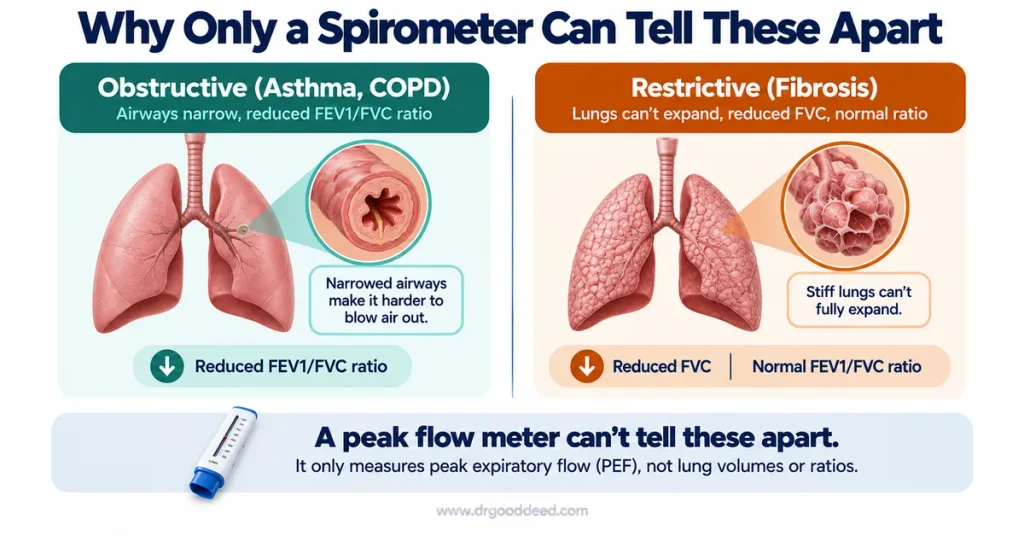
Respiratory disease splits broadly into two categories: obstructive (airways narrow, air struggles to get out, as in asthma and COPD) and restrictive (the lungs themselves can’t expand fully, as in pulmonary fibrosis or certain neuromuscular conditions).
Spirometry separates these because it measures both speed and volume. A reduced FEV1/FVC ratio points to obstruction. A reduced FVC with a normal or high ratio points toward restriction.
A peak flow meter only measures speed at one instant. A low PEF reading shows up in both obstructive and restrictive disease, and research comparing peak expiratory flow against full spirometry has found it has a meaningfully lower ability to separate obstructive from restrictive patterns. But it cannot tell you whether the underlying cause is asthma, COPD, or something structurally different in the lungs themselves. Diagnosis needs the fuller data set spirometry provides.
Who Needs Which Device
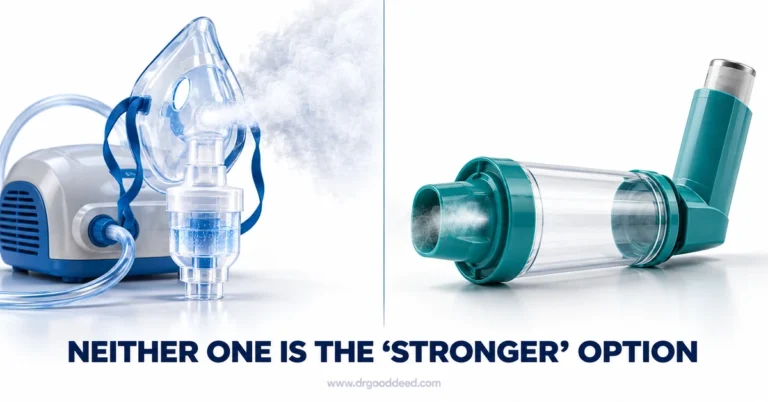
A peak flow meter fits someone already diagnosed with asthma or COPD who needs a fast, repeatable way to catch worsening control before symptoms become severe. It plugs directly into a written asthma action plan and pairs well with quick-relief medication decisions, similar in spirit to how a nebulizer vs inhaler choice depends on how severe a flare is.
A spirometer fits someone with unexplained breathlessness, a chronic cough, or a family history of lung disease who needs an initial workup. It also fits anyone with a confirmed diagnosis who needs periodic reassessment, since spirometry for COPD diagnosis and staging relies on repeat testing to track disease progression and response to treatment over months or years.
Limitations and Safety Considerations
- Peak flow meters depend heavily on correct technique and full effort. A weak or half-hearted blow produces a falsely low number, and there’s no standardized way to compare readings between different meter brands.
- Someone in severe respiratory distress may not be able to generate a valid peak flow reading at all, since the maneuver itself requires a forceful, coordinated breath out.
- Spirometry demands more coordinated effort than peak flow testing: a full inhale, a fast complete exhale, and several repeat attempts to get three reproducible results, which can be genuinely difficult for young children, very elderly patients, or anyone with significant muscle weakness.
- Neither device replaces a physician’s evaluation. An abnormal reading on either one is a signal to seek medical assessment, not a self-contained diagnosis.
Pro Tip: Peak flow readings drift lower in the early morning even in well-controlled asthma, so compare same-time-of-day readings against your personal best rather than comparing a morning number to an evening one, or you’ll flag a false alarm.
When to Talk to Your Doctor
Book an appointment if your peak flow readings drop into the yellow or red zone repeatedly, even after using rescue medication as directed. New or worsening shortness of breath, a cough lasting more than a few weeks, or chest tightness that interferes with daily activity all warrant a spirometry test rather than continued home monitoring alone.
If your symptoms resemble something else entirely, sudden fever with productive cough versus gradual breathlessness, it’s worth reviewing the distinction covered in bronchitis vs pneumonia before assuming it’s a lung capacity issue at all.
FAQs
Can a peak flow meter diagnose asthma?
No. A peak flow meter only flags reduced airflow. It cannot distinguish asthma from COPD or restrictive lung disease. Diagnosis requires a spirometry test, often combined with bronchodilator response testing and a physician’s clinical evaluation.
How often should you use a peak flow meter at home?
Most people with moderate to severe asthma check it once daily, typically each morning before medication, and again if symptoms appear. Your asthma action plan sets the exact schedule based on your personal best and current control level.
Is spirometry painful or uncomfortable?
No, spirometry isn’t painful. It can feel briefly tiring or dizzying from the forceful repeated exhales, especially the third or fourth attempt. There’s no needle, no sedation, and most tests finish within 15 to 30 minutes total.
Can children use a peak flow meter or spirometer?
Yes, both, with modifications. Peak flow meters work for most children age 5 and up who can follow instructions. Spirometry is technically possible from around age 5 to 6, though results in younger children are less reliable due to coordination limits.
Do you need a prescription for a peak flow meter?
No. Peak flow meters are sold over the counter at US pharmacies without a prescription. A doctor typically still sets your personal best and target zones, since raw peak flow numbers mean little without that individual baseline.
Sources
- NHLBI: Monitoring Your Asthma link
- NHLBI: Asthma Action Plan link
- Cleveland Clinic: Spirometry link
- StatPearls (NCBI): Peak Flow Rate Measurement link
- StatPearls (NCBI): Pulmonary Function Tests link
- American Family Physician: An Approach to Interpreting Spirometry link
- ScienceDirect: Screening for Impaired Pulmonary Function Using Peak Expiratory Flow link
- PMC: Peak Flow Meter with a Questionnaire and Mini-Spirometer to Detect Asthma and COPD link
- Nebulizer vs Inhaler link
- Oxygen Concentrator vs Oxygen Tank link
Medical Disclaimer: This article is for general information only and is not medical advice. It does not replace a diagnosis, treatment plan, or guidance from a qualified healthcare professional. Always talk to your doctor about your own symptoms and before starting, stopping, or changing any treatment. If you think you may be having a medical emergency, call 911 or go to your nearest emergency room.